Showing posts with label books. Show all posts

Wednesday, January 07, 2015

Ministry Reading List for 2015

Seeing Black & White in a Gray World:
The Need for Theological Reasoning in the Church's Debate over Sexuality

by Bill Arnold

CAMPUS gODS:
Exposing the Idols that Can Derail the Present & Destroy the Future

by Guy Chmieleski

Shaping Their Future:
Mentoring Students Through Their Formative College Years

by Guy Chmieleski

Images of Salvation in the New Testament
by Brenda B. Colijn

Jesus Have I Loved, but Paul?:
A Narrative Approach to
the Problem of Pauline Christianity

by JR Daniel Kirk

Pastoral Practices: A Wesleyan Paradigm
by Diane Leclerc & Mark A. Maddix

Kingdom Conspiracy:
Returning to the Radical Mission of the Local Church

by Scot McKnight

Sermon on the Mount (The Story of God Bible Commentary)
by Scot McKnight

A Change of Heart:
A Personal & Theological Memoir

by Thomas C. Oden

Insourcing:
Bringing Discipleship Back to the Local Church

by Randy Pope

Thinking, Listening, Being:
A Wesleyan Pastoral Theology

by Jeren Rowell

Sent & Gathered:
A Worship Manual for the Missional Church

by Clayton J. Schmit

The Radical Wesley:
The Patterns & Practices of a Movement Maker

by Howard Snyder

The New Parish:
How Neighborhood Churches Are Transforming Mission,
Discipleship & Community

by Paul Sparks

A Thicker Jesus:
Incarnational Discipleship in a Secular Age

by Glen Harold Stassen

Giving Blood:
A Fresh Paradigm for Preaching

by Leonard Sweet

Called:
Following a Future Filled with the Possible

by JD Walt

The Class Meeting:
Reclaiming a Forgotten (and Essential) Small Group Experience

by Kevin Watson

The Crown & the Fire:
Meditations on the Cross & the Life of the Spirit

by NT Wright

Simply Good News:
Why the Gospel Is News & What Makes It Good

by NT Wright

This list is subject to change, be added to, edited, etc as ministry & culture make necessary. It also doesn't include planned fiction & devotional books.

Thursday, August 25, 2011

What is doctrine?

"Christian doctrine is unique in that it is an intellectual response to the historical activity and revelatory disclosure of God. Doctrine is rational reflection upon God’s saving activity in Jesus Christ. Foundational to the idea of 'doctrine' is the fact that we need to be told what God is like. It is not ours to determine what kind of God we will believe and obey. It is God’s to determine to show Himself to us. Doctrine is our effort to articulate what He has made known. Doctrine is the divinely authorized attempt to describe God in accordance with how He has revealed Himself in creation, in history, in Jesus Christ and in the Scriptures. In doing so, doctrine also serves to expose false interpretations of reality, false concepts of God. It is the aim of doctrine to make sense of the individual’s and the church’s experience of God as He has made Himself known in Jesus Christ."
Alister McGrath,
Understanding Doctrine:
Its Relevance & Purpose for Today

Tuesday, September 18, 2007

N.T. Wright on the Bible & Narrative theology

"It's not, for a start, a list of rules, thought it contains many commandments of various sorts and in various contexts. Nor is it a compendium of true doctrines, though of course many parts of the Bible declare great truths about God, Jesus, the world and ourselves in no uncertain terms. Most of its constituent parts, and all of it when put together (whether in the Jewish canonical form or the Christian one), can best be described as story. This is a complicated and much-discussed theme, but there is nothing to be gained by ignoring it.

"The question is, How can a story be authoritative? If the commanding officer walks into the barrack-room and begins 'Once upon a time,' the soldiers are likely to be puzzled. If the secretary of the cycling club pins up a notice which, instead of listing times for outings, offers a short story, the members will not know when to turn up. At first sight, what we think of as 'authority' and what we know as 'story' do not readily fit together.

"But a moment's thought suggests that, at deeper levels, there is more to it than that. For a start, the commanding officer might well need to brief the soldiers about what has been going on over the past few weeks, so that they will understand the sensitivities and internal dynamics of the peace-keeping task they are now to undertake. The narrative will bring them up to date; now it will be their task to act out the next chapter in the ongoing saga. Or supposing the secretary of the club, having attempted unsuccessfully to make the members more conscious of safety procedures, decides to try a different tack, and puts up a notice consisting simply of a tragic story, without further comment, of a cyclist who ignored the rules and came to grief. In both cases we would understand that some kind of 'authority' was being exercised, and probably all the more effectively than through a simple list of commands.

"There are other ways, too, in which stories can wield the power to change the way people think and behave - in other words, can exercise power and/or authority...A familiar story told with a new twist in the tail jolts people into thinking differently about themselves and the world. A story told with pathos, humor or drama opens the imagination and invites readers and hearers to imagine themselves in similar situations, offering new insights about God an human beings which enable them then to order their own lives more wisely.

"All of these examples, and many more besides which one might easily think of, are ways in which the Bible does in fact work, does in fact exercise authority. This strongly suggests that for the Bible to have the effect it seems to be designed to have it will be necessary for the church to hear it as it is, not to chop it up in an effort to make it something else..."

- Bishop N.T. Wright, from The Last Word: Beyond the Bible Wars to a New Understanding of the Authority of Scripture (Harper San Francisco, 2005), pp.25-27.

Thursday, August 30, 2007

Our Christian subculture

Robyn's van is getting new brake pads and rotors put on, so today I had to take her to work and pick her up at the end of her shift. I arrived in the Waterfront in Homestead a little early, so I went to the nearby Barnes & Noble bookstore to hang out for a while. I love bookstores.

One of my first stops in the bookstore was the Religion section. Secular bookstores rarely have Bibles stocked for a "Bible geek", so it didn't take long to exhaust my interest in that book rack. There were three additional racks marked "Christianity", though, so I figured I might find something.

I was saddened and surprised. The racks contained so much of what I would term "pop theology lite". I won't mention names or specific titles, but it was mostly fluffy crap. There as some stuff about the end of the world (it's soon, in case you didn't know), some stuff about how to be really, really happy (complete with pictures of the most lily-white, bright-toothed smiling people you've ever seen), and some stuff about how to get rich...the Jesus way (never mind the fact that Jesus lived a life of itinerant poverty and died seemingly quite poor). Many of the books were from folks of whom I've never heard...apparently self-appointed "experts" out to share their particular version of the gospel.

Is that Christianity? I don't think so; I certainly hope not. Despite my clergy status and love for traditional liturgics, I haven't really been immersed in the "Christian culture" in some time; I almost feel at times that it was a part of my youth which I've since outgrown.

One thing I know for sure is that what I saw on the multitude of racks at the bookstore does not match up well with the Christian faith as taught in the Bible (which, again, had only one rack) or in the writings of the early Church fathers, the Reformers, the Book of Common Prayer, John Wesley, or our hymnody at its best.

Somebody must like this stuff. But I can't imagine who that might be (I watched for a while, but none of those books were purchased while I was there).

It was just bizarre to me that these books and authors represented Christianity. And if I was put off, I can only imagine what non-Church people must think.

A quote came to mind...one which I've carried with me for a year. A friend recommended a book to me which was a good read, and this particular quote has stayed with me...

"Jesus and his teachings will not seem as strange or repellant to non-Christians as will the Christian subculture we have created."- Dan Kimball, The Emerging Church, p. 82.
This is what I was witnessing at the bookstore. People think that these books and authors actually represent Christianity. No wonder the mainline Church is in trouble.

I don't have any answers to this dilemma. I'm sure a rack of books including the Book of Common Prayer, A Plain Account of Christian Perfection, Resident Aliens, City of God, Reaching Out Without Dumbing Down, and Against Heresies wouldn't have fared much better, even if the theological depth of the selections would have increased a thousandfold.

My point is that Kimball's indictment is real. And I'm guilty, too; all I bought was the latest issue of "Christianity Today".

Wednesday, June 20, 2007

JUMC: Year One (or "Lessons from Frank Miller's Batman")

In 1988, while attending Edinboro University (where I met both my future wife Robyn and my longtime friend Dayton), I went to Pittsburgh for a weekend to visit my friend Marie Waun (whose mother was, ironically enough given my current vocation, a United Methodist pastor) and to watch with Marie the premiere of the U2 concert film Rattle and Hum. Great movie for a U2 fan...good weekend overall.

Before catching the Greyhound bus for the trip back to Edinboro, I stopped at Eide's Entertainment to purchase something to read on the long trip back to school. I had heard a great deal about Frank Miller's The Dark Knight Returns, and was glad to finally have a chance to read this "graphic novel", which had been turning the world of comic books on its ear. I devoured the book on the bus ride, finishing it just as the vehicle pulled into the university lot.

It is not overstating the truth to state that this book changed my life. There are a lot of reasons for this. DKR introduced me to postmodern thinking, to new ways of storytelling, to the idea of "metanarrative" (which has become so important in my theology), and, indirectly, to "film noir", to semiotics, and to host of other ideas. It has been hugely influential; I can hardly imagine American Psycho, Fight Club, or Quentin Tarantino without Miller's DKR (OK, that may be overstating a bit...it's likely, however, that all those creative people were drinking water from the same well as Frank Miller). Beyond all that, it's just a really good story, told exceptionally well.

I was interested, therefore, in Miller's "prequel", called Batman: Year One, which, obviously, told the story of how Batman came to be (as opposed to DKR, which deals with his final days).

In both DKR and Year One, Miller is a patient storyteller who writes about a very patient (though extremely passionate) man. Bruce Wayne doesn't simply decide to become a vigilante and immediately engage criminals in fisticuffs; he observes, prepares, learns "the lay of the land", determines the identities of the "power players", and makes proper connections, beginning to build the appropriate relationships he'll need to accomplish his crime-fighting mission.

Not a bad model. That's pretty much what I've been trying to do, and, now, my first year at JUMC is nearly complete. I've spent "year one" trying to observe, prepare, learn "the lay of the land", determine the identities of the "power players", and make proper connections, beginning to build the appropriate relationships I'll need to lead JUMC in accomplishing our disciple-making mission.

I've discovered a lot about the congregation, her history, the area in which God has placed us, and, surprisingly, myself.

Allow me to risk being a mite unorthodox for a moment. I've come to believe that perhaps the Church has it slightly wrong. Our Book of Discipline states that our mission is "to make disciples of Jesus Christ", but, properly speaking, it's the Spirit who makes disciples, not us. The best we can do is to faithfully allow ourselves to be used by the Spirit to do great things...large or small.

We shouldn't get too caught up in programs or programming. Programs can be good, and can indeed point us to larger truths. But it seems to me that "programming" is so yesterday, so Baby Boomer; it's like placing the Adam West TV "Batman" into a post-DKR universe...he may catch a few bad guys, but he'll be largely ineffective in the bigger picture.
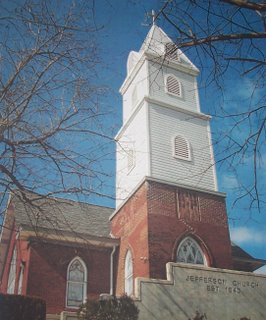
Instead of programming (which is entirely supported by the somewhat dated idea of "making disciples"), relationship-building is a far more authentic approach in this 21st century, richly complex, post-postmodern world. In Frank Miller's world, for instance, there are all kinds of programs, for all kinds of purposes, but there are precious few meaningful relationships, which, in Miller's apocalyptic approach, results in the fall of western civilization.

This brings me back to a ministry theme to which I often return...the idea of incarnational ministry. We need to go where the people are, not simply invite them to our building with our latest neato program. We need to eat lunch with them in their homes or their favorite restaurants, not just invite them to our latest potluck supper or spaghetti dinner. We need to get to know the people in our communities by name, so we can give an authentic "hello" in the grocery store...and by vehicle, so that we can wave knowingly when they drive past. Just as important, they need to know us, so they can respond without having to question our motivations. We don't build relationships to make more church members, but simply out of love.

At any rate, with the "year one" business out of the way, it's time for me to look beyond now, and begin to really allow the Spirit to transform our life together and our approach to ministry. Same bat-time, same bat-channel...but hopefully with more bat-wisdom.

Saturday, March 31, 2007

What I've Been Reading

* The Cold War: A New History by John Lewis Gaddis

I actually just finished Gaddis' book and enjoyed it tremendously. Most of my undergraduate work at IUP focused on Cold War popular culture, so it was nice to revisit those roots, and Gaddis is one of the world's top Cold War scholars, a professor at Yale.

One of the things I ended up really appreciating about the book is what Gaddis said about leadership. He lifted up brave leaders such as Ronald Reagan, Lech Walesa, and John Paul II; he may not have always agreed with their politics or policies, but he attributed their courage in standing up to radical evil to contributing powerfully to ending the Cold War and liberating hundreds of millions of souls from bondage. In short, courage matters, and it's always right to take a stand against wrong, though the Church has weapons far more potent than guns and bombs.


* United Methodist Doctrine: The Extreme Center by Scott J. Jones

I've admired Bishop Jones since he was elected to the episcopacy; he is one of the few real theologian-bishops of the Church (I'd include Timothy Whitaker and William Willimon on this all-too-short list). This book, which I'm still reading, is OK, but doesn't really present any new perspectives or insights. In fact, in my view, better summaries of Methodist doctrine were written by several others, including Ted Campbell, Randy Maddox, Thomas Oden, Albert Outler, Charles Yrigoyen, and even Nazarene Kenneth Grider. It's not bad, mind you; it's just not as well written or well presented as some other volumes. Maybe I'll change my mind before I'm finished with it.


* Standing in the Margin: How Your Congregation Can Minister With the Poor (and perhaps recover its soul in the process) by Mary Alice Mulligan & Rufus Burrow

I appreciate the basic approach of Burrow and Mulligan, even though I disagree with some of their theological assumptions. The truth is that we mainline Protestants have done a sinfully terrible job of ministering to and with "the least of these", a subject concerning which I post often. There is a radical disconnect between the Church (certainly in Western PA Conference) and those "on the margins"...the poor, minorities, the powerless, etc. In fact, I've found that the larger the congregation, the greater the disconnect, which is the opposite of what should be. We often do things for the poor without actually living with the poor in any meaningful way.

How do we minister in this area without either being too paternalistic ("Have no fear, the Church is here; we'll take care of you") or doing things that primarily make us feel good, while really making very little difference? Burrow and Mulligan have some ideas.


* The World-Shattering Ministry of Jesus by Anne Crumpler & John Gooch

I'm reading this to prepare spiritually for summer, especially for my summer preaching. Not a lot of new insights yet (which isn't surprising, given that it's a Cokesbury resource, which tend to be extremely safe, predictable, and bland...nothing like Jesus), but some good reminders.

Wednesday, March 21, 2007

Remembering Thomas Cranmer

One of the most important Church leaders of the second millennium was undoubtedly Thomas Cranmer. He served as Archbishop of Canterbury during the English Reformation, and was martyred on this date in 1556 by the delusional Bloody Mary, Queen of England.

Archbishop Cranmer's finest achievement was the writing and initial editing of the first Book of Common Prayer, the official worship book for the Church of England. This book is without question the best English language liturgical resource ever put together. In the history of the English-speaking world, only the King James Version of the Bible and the writings of Shakespeare have had a more significant influence on language and culture. John Wesley said of the prayer book, "I believe there is no Liturgy in the world, either in ancient or modern language, which breathes more of a solid, scriptural, rational piety than the Common Prayer of the Church of England." I use the Book of Common Prayer quite often when preparing for worship; usually, I utilize it each week. In fact, my own personal prayer order is largely adapted from the orders for daily prayer found in this wonderful book.

It is miraculous that 458 years after its initial publication, the words, prayers, and orders in Archbishop Cranmer's masterpiece are not only still elegantly powerful, but are among the most relevant liturgical pieces in the contemporary Church. In fact, I urge everyone to read through the Psalter as found in the Book of Common Prayer; the version found in the prayer book remains the most beautiful ever translated (though the 2004 publication of the Holman Christian Standard Bible, which contains a truly lovely Psalter, gives Cranmer a run for his money).

At any rate, I'm thanking God today for the ministry of Archbishop Thomas Cranmer, who left a rich missional legacy which continues to bless the Church and, through the Church, the world. If you don't own a copy of the Book of Common Prayer (shame on you), you can order a relatively inexpensive copy here, or read it online here.

Tuesday, January 09, 2007

What I'm Reading

Song of Redemption by Lynn Austin
I like to always be reading some fiction; this is the second novel in a series about King Hezekiah, and the first book was a nice read. It helped me to view Hezekiah and the prophets of that day in a new light.

The Irresistible Revolution: Living as an Ordinary Radical by Shane Claiborne
Claiborne and I seem to be on the same page concerning the problems of institutional Christianity, the importance of social outreach, and the hypocrisy of much of wealthy suburbia. Every pastor and Christian leader should add this to their reading list...very, very challenging stuff.

Cross-Shattered Christ: Meditations on the Seven Last Words by Stanley Hauerwas
This is in preparation for Lent, and is written by the most important ethicist of my lifetime.

The Mosaic of Christian Beliefs: Twenty Centuries of Unity & Diversity by Roger Olson
Olson is a solid Arminian/Wesleyan evangelical, equally horrified by extreme Protestant liberalism and fundamentalism. He seems to have written this book to define the "Great Tradition", the essentials of the Christian religion (which could be a presumptuous thing) while also outlining the bounds of heresy. It actually seems to be pretty generous. My criticism (so far) is that is seems strong on orthodoxy (which is all well and good) but weak on orthopraxis (which is at least as important, if not moreso).

Wednesday, November 15, 2006

What I'm Reading

The Emerging Church: Vintage Christianity for New Generations
by Dan Kimball...

...this was recommended to me by a friend...aside from discovering that I am apparently "postmodern" (click here and scroll down to the term for a workable, if imperfect, definition), I am also discovering that my "ministry philosophy", which has at times looked "old", is actually pretty current and, excitingly, forward thinking...a good read so far - affirming and challenging...


The Pendragon by Catherine Christian...

...I actually read this Arthurian piece years ago and am taking another look at it now...a good distraction to settle my mind...it's one of the better Arthurian novels out there (though it can be difficult to find nowadays), and mixes Malory's take with a real Dark Ages flavor...highly recommended...


Luke 1 - 2

...to spiritually prepare for the busy-ness of Christmas, I've been prayerfully reading these two chapters in multiple translations.

Thursday, May 04, 2006

Friday, January 06, 2006

Recommended Bibles


ESV (English Standard Version)


Text edition

Wide Margin edition

ESV Study Bible


RSV
(Revised Standard Version)


Text edition

New Oxford Annotated RSV Bible with Apocrypha


NRSV
(New Revised
Standard Version)


Text edition

New Oxford Annotated NRSV Bible

New Interpreter's Study Bible


NIV
(New International Version)


Text edition

Reflecting God Study Bible


TNIV
(Today's New International Version)


Text edition

Pittsburgh Steelers edition

TNIV Study Bible


NKJV (New King James Version)


Text edition

Wesley Study Bible


HCSB
(Holman Christian
Standard Bible)


Text edition

Minister's Bible


KJV (King James Version)


Text edition

Monday, January 02, 2006

Recommended Books

BIBLES

Revised Standard Version (RSV)

New Revised Standard Version (NRSV)

English Standard Version (ESV)

New King James Version (NKJV)

New International Version (NIV)

Today's New International Version (TNIV)

Holman Christian Standard Bible (HCSB)

Reflecting God Study Bible (NIV)

Wesley Bible (NKJV)

New Oxford Annotated Bible (RSV)

New Oxford Annotated Bible (NRSV)

New Interpreter's Study Bible (NRSV)


FICTION

Gods & Kings (Chronicles of the Kings, Book 1) by Lynn Austin

Song of Redemption (Chronicles of the Kings, Book 2) by Lynn Austin

The Martian Chronicles by Ray Bradbury

The October Country by Ray Bradbury

Holy Terror by Alan Brennert

Astro City: Confession by Kurt Busiek

The Pendragon by Catherine Christian

Jurassic Park by Michael Crichton

D'Aulaires' Book of Greek Myths by Ingri & Edgar Parin D'Aulaire

D'Aulaires' Book of Norse Myths by Ingri & Edgar Parin D'Aulaire

The Science of Superheroes by Lois Gresh & Robert Weinberg

Siddhartha by Hermann Hesse

Brave New World by Aldous Huxley

The Ring of the Nibelung by Gil Kane & Roy Thomas

Taliesin by Stephen Lawhead

Merlin by Stephen Lawhead

Arthur by Stephen Lawhead

In His Own Write & A Spaniard in the Works by John Lennon

The Chronicles of Narnia by C.S. Lewis

The Screwtape Letters by C.S. Lewis

The Long Halloween by Jeph Loeb & Tim Sale

The Kalevala by Elias Lonnrot

Lonesome Dove by Larry McMurtry

The Singer, The Song & the Finale by Calvin Miller

Batman: Year One by Frank Miller & David Mazzucchelli

The Dark Knight Returns by Frank Miller

The Killing Joke by Alan Moore & Brian Bolland

Watchmen by Alan Moore & Dave Gibbons

Nineteen Eighty-Four by George Orwell

This Present Darkness & Piercing the Darkness by Frank E. Peretti

The Complete Tales and Poems by Edgar Allan Poe

Age of Bronze: A Thousand Ships by Eric Shanower

Age Of Bronze: Sacrifice by Eric Shanower

The Hobbit & The Lord of the Rings by J.R.R. Tolkien


HISTORY

The Love There That's Sleeping: The Art And Spirituality of George Harrison by Dale Allison

The History of the Evangelical United Brethren Church by J.B. Behney & P.H. Eller

Lennon by Ray Coleman

Ronald Reagan: How an Ordinary Man Became an Extraordinary Leader by Dinesh D'Souza

Free Soil, Free Labor, Free Men by Eric Foner

The Cold War: A New History by John Lewis Gaddis

The Story of Christianity, Volume 1: The Early Church to the Reformation by Justo L. Gonzalez

The Story of Christianity: Volume 2: The Reformation to the Present Day by Justo L. Gonzalez

The Life of John Wesley: A Brand from the Burning by Roy Hattersley

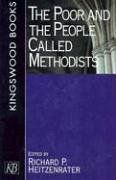
The Poor and the People Called Methodists: 1729-1999 by Richard P. Heitzenrater

Wesley and the People Called Methodists by Richard P. Heitzenrater

Good News to the Poor: John Wesley's Evangelical Economics by Theodore W. Jennings , Jr.

The Conservative Mind: From Burke to Eliot by Russell Kirk

Practical Divinity: Theology in the Wesleyan Tradition by Thomas A. Langford

John Adams by David McCullough

The Johnstown Flood by David McCullough

Because He Could by Dick Morris

Rewriting History by Dick Morris

When Character Was King: A Story of Ronald Reagan by Peggy Noonan

The Story of American Methodism by Frederick Norwood

The American Leadership Tradition: Moral Vision from Washington to Clinton by Marvin Olasky

The Mosaic of Christian Beliefs: Twenty Centuries of Unity & Diversity by Roger E. Olson

The Story of Christian Theology: Twenty Centuries of Tradition & Reform by Roger Olson

America's Bishop: The Life of Francis Asbury by Darius L. Salter

The Beatles Forever by Nicholas Schaffner

The Crisis of the Old Order, 1919-1933: The Age of Roosevelt, Volume One by Arthur M. Schlesinger, Jr.

Reagan's War by Peter Schweizer

The History of United Methodism in Western Pennsylvania by Wallace Guy Smeltzer

The Price of Patriotism: Indiana County, Pennsylvania and the Civil War by W. Wayne Smith

Thomas Coke: Apostle of Methodism by John Vickers

Johnstown, Pennsylvania: A History, Part One: 1890-1936 by Randy Whittle

Comic Book Nation: The Transformation of Youth Culture in America by Bradford Wright


LEADERSHIP

The Myth of a Christian Nation: How the Quest for Political Power is Destroying the Church by Gregory Boyd

The Irresistible Revolution: Living as an Ordinary Radical by Shane Claiborne

Dinosaur Heart Transplants: Renewing Mainline Congregations by R. Robert Cueni

Reaching Out Without Dumbing Down by Marva Dawn

A Royal "Waste" of Time: The Splendor of Worshiping God & Being Church for the World by Marva Dawn

The Sense of the Call: A Sabbath Way of Life for Those Who Serve God, the Church, & the World by Marva Dawn

Truly the Community: Romans 12 and How to Be the Church by Marva Dawn

The Unnecessary Pastor: Rediscovering the Call by Marva Dawn & Eugene Peterson

Leadership by Rudolph W. Giuliani

The Lord Be With You: A Visual Handbook for Presiding in Christian Worship by Charles Hackett & Don Saliers

Leading Beyond the Walls: Developing Congregations With a Heart for the Unchurched by Adam Hamilton

The Art of Pastoring: Ministry Without All the Answers by David Hansen

After Christendom: How the Church Is to Behave If Freedom, Justice, and a Christian Nation Are Bad Ideas by Stanley Hauerwas

Resident Aliens: Life in the Christian Colony by Stanley Hauerwas & William Willimon

Unleashing the Scripture: Freeing the Bible from Captivity to America by Stanley Hauerwas

The Emerging Church: Vintage Christianity for New Generations by Dan Kimball

The Heart of a Great Pastor: How to Grow Stronger And Thrive Wherever God Has Planted You by H. B. London & Neil Wiseman

The 21 Irrefutable Laws of Leadership by John C. Maxwell

The 21 Indispensable Qualities of a Leader by John C. Maxwell

The Once and Future Church: Reinventing the Congregation for a New Mission Frontier by Loren Mead

Walking With the Poor: Principles and Practices of Transformational Development by Bryant Myers

Classical Pastoral Care, Vol. 1: Becoming a Minister by Thomas C. Oden

Classical Pastoral Care, Vol. 2: Ministry Through Word and Sacrament by Thomas C. Oden

Classical Pastoral Care, Vol. 3: Pastoral Counsel by Thomas C. Oden

Classical Pastoral Care, Vol. 4: Crisis Ministries by Thomas C. Oden

Pastoral Theology: Essentials of Ministry by Thomas C. Oden

The American Leadership Tradition: Moral Vision from Washington to Clinton by Marvin Olasky

Twelve Dynamic Shifts for Transforming Your Church by E. Stanley Ott

Under the Unpredictable Plant: An Exploration in Vocational Holiness by Eugene Peterson

America's Bishop: The Life of Francis Asbury by Darius L. Salter

Natural Church Development: A Guide to Eight Essential Qualities of Healthy Churches by Christian A. Schwarz

Churches That Make a Difference: Reaching Your Community with Good News and Good Works by Ronald J. Sider

God's Politics: Why the Right Gets It Wrong and the Left Doesn't Get It by Jim Wallis

Leadership in the Wesleyan Spirit by Lovett H. Weems

Pastor: The Theology and Practice of Ordained Ministry by William Willimon


THEOLOGY

Understanding the Old Testament by Bernhard Anderson

On the Incarnation by Saint Athanasius

The Book of Common Prayer

In Darkest England and the Way Out by William Booth

Methodist Doctrine: The Essentials by Ted A. Campbell

Powers, Weakness, & the Tabernacling of God by Marva Dawn

By Water and the Spirit: A United Methodist Understanding of Holy Baptism by Gayle Felton

This Holy Mystery: A United Methodist Understanding of Holy Communion by Gayle Felton

Polity, Practice, And the Mission of The United Methodist Church by T.E. Frank

Beyond Smells & Bells: The Wonder and Power of Christian Liturgy by Mark Galli

A Wesleyan-Holiness Theology by J. Kenneth Grider

Resident Aliens: Life in the Christian Colony by Stanley Hauerwas & William Willimon

There Shall Be No Poor Among You by Leslie J. Hoppe

United Methodist Doctrine: The Extreme Center by Scott J. Jones

The Story of God: Wesleyan Theology and Biblical Narrative by Michael Lodahl

Responsible Grace: John Wesley's Practical Theology by Randy L. Maddox

Carmen Christi by R.P. Martin

The Portion of the Poor: Good News to the Poor in the Wesleyan Tradition by M. Douglas Meeks

The Atonement in Christ by John Miley

Systematic Theology by John Miley

Ancient Christian Commentary on Scripture (series) edited by Thomas C. Oden

John Wesley's Scriptural Christianity by Thomas C. Oden

Systematic Theology, Vol. 1: The Living God by Thomas C. Oden

Systematic Theology, Vol. 2: The Word of Life by Thomas C. Oden

Systematic Theology, Vol. 3: Life in the Spirit by Thomas C. Oden

One Faith: The Evangelical Consensus by Thomas C. Oden & J.I. Packer

Arminian Theology: Myths And Realities by Roger E. Olson

The Story of Christian Theology: Twenty Centuries of Tradition & Reform by Roger Olson

The Mosaic of Christian Beliefs: Twenty Centuries of Unity & Diversity by Roger E. Olson

Evangelism & Theology in the Wesleyan Spirit by Albert C. Outler

John Wesley (Library of Protestant Thought) edited by Albert C. Outler

Exploring Our Christian Faith by W. T. Purkiser

Completely Pro-Life: Building a Consistent Stance by Ronald Sider

Let Every Soul Be Jesus' Guest: A Theology of the Open Table by Mark W. Stamm

Baptism: Christ's Act in the Church by Laurence Hull Stookey

Eucharist: Christ's Feast With the Church by Laurence Hull Stookey

Calendar: Christ's Time for the Church by Laurence Hull Stookey

The United Methodist Hymnal

Theological Institutes by Richard Watson

Ancient-Future Worship: Proclaiming and Enacting God's Narrative by Robert E. Webber

John Wesley's Sermons by John Wesley (Outler/Heitzenrater, eds.)

A Plain Account of Christian Perfection by John Wesley

The Politics of Jesus by John Howard Yoder

Belief Matters: United Methodism's Doctrinal Standards by Charles Yrigoyen

John Wesley: Holiness of Heart & Life by Charles Yrigoyen